
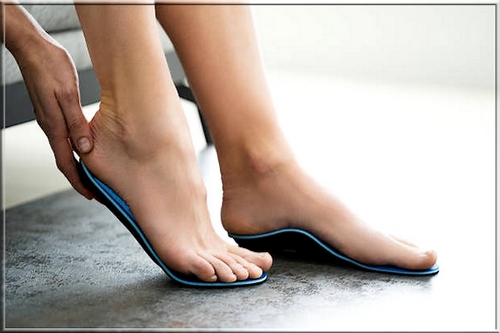
If you’re researching carbon fiber insoles for plantar fasciitis, you’ve probably seen them on the feet of Olympic marathoners.
Those sleek, rigid plates promise more speed and efficiency.
But here’s the real question burning in your mind : Can something designed for elite performance actually relieve my heel pain ?
The answer isn’t a simple yes or no.
And if you have flat feet or wide feet, the equation changes completely.
In this ultimate guide, we’ll answer :
- Do carbon fiber insoles help plantar fasciitis or make it worse ?
- Can you use carbon fiber insoles with flat feet without risking injury ?
- Where to find wide carbon fiber insoles (and what to do if they don’t exist).
- Carbon plates vs orthotics : which one do you really need ?
- Are carbon fiber insoles worth the money or should you invest in physio first ?
- And a 2-Week Test Protocol to try them safely.
How do carbon fiber insoles work ? (The “Springboard” effect)
Before judging if they are an “ally” or a “mistake,” you need to understand the simple mechanics.
The trampoline under your foot
A carbon plate insole acts like a rigid lever. When your foot strikes the ground, the plate bends slightly, storing energy.
As you push off, it snaps back to its original shape, releasing that energy and propelling you forward.
It’s often called the “springback” or “energy return” effect. This is why runners feel faster with them.
Many carbon fiber insoles reviews highlight this sensation as the main reason people love them.
Why it could relieve plantar fasciitis (The theory)
This is the crucial part for you.
Your plantar fascia takes a massive beating during the “toe-off” phase of your stride.
That’s when your toes bend upward, stretching the fascia.
A carbon plate rigidifies the forefoot. It drastically reduces how much your toes need to bend.
Essentially, it puts your fascia on “light duty” during your run.
- Less bending = less stretching = less pain.
This is the main reason people search for carbon fiber insoles for heel pain and do carbon fiber insoles help plantar fasciitis.
The 3-round match : Carbon insoles vs. your feet
Round 1 – The verdict for “normal” feet with plantar fasciitis
For a runner with a standard foot arch and no major structural issues, carbon fiber insoles can be a fantastic tool.
They provide that pain-free run we just talked about. Many runners report an immediate feeling of relief.
However, they are not a cure.
Think of them as a performance crutch that lets you run while your fascia heals (through stretching and strengthening).
If you’re looking for the best insoles for plantar fasciitis with carbon, this category is for you.
Verdict : ✅ Good ally, used wisely.
Round 2 – The flat feet problem (Can you use carbon fiber insoles with flat feet ?)
This is where most online guides fail you.
Carbon fiber insoles for flat feet present a major paradox.
A carbon plate is completely neutral. It has zero arch support.
If you overpronate (your ankle rolls inward), a carbon plate will not correct that.
It will simply make your already unstable foot push off with immense rigidity.
Analogy : “Using carbon insoles for overpronation without arch support is like putting a Formula 1 engine in a car with bald tires and broken suspension. You might go faster, but you’re heading straight for a crash.”
The risks :
- Increased stress on knees and hips.
- Shin splints.
- Achilles tendonitis.
So, can you use carbon plates with flat feet ?
Yes, but with a major caveat : You need to address the pronation first.
This often means using your custom orthotics alongside the carbon plate (more on this later).
The question do carbon plates work for flat feet really depends on whether you combine them with support.
For flat-footed runners, the smarter approach is often a hybrid insole that combines arch support with a carbon plate.
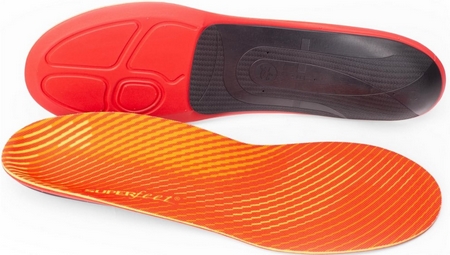
The Superfeet Run Pain Relief Insoles use a trim-to-fit carbon plate embedded in a supportive foam base, offering the rigidity of carbon with the structural support that flat feet require (aff).
Superfeet Run – Quick specs :
• Price range : ~$50-65
• Key features : Foam + carbon plate hybrid, trim-to-fit design, moisture-wicking top cover
• Best for : Running, hiking, mild flat feet
• User feedback : “Excellent for plantar fasciitis and knee pain related to mild pronation.”
⭐ 4,500+ reviews | Bestseller
Round 3 – The wide feet challenge (Where are the wide carbon fiber insoles ?)
This is the second most common question: “Where can I find wide carbon fiber insoles ? Everything is too narrow !”
Also commonly asked as : “do carbon insoles come in wide sizes” ?
The hard truth : The market for carbon fiber insoles for wide feet is tiny. Most brands use standard, narrow molds.
If you search for best carbon insoles for wide feet, you’ll find very few options.
The problem :
If you force a wide foot into a narrow carbon plate, you compress the metatarsals.
This can lead to :
- Tingling and numbness.
- Pain on the top of the foot.
- A condition called Morton’s Neuroma.
The solution :
If you have wide feet, your strategy must be different.
You need :
- Shoes with a very high volume (like Hoka, Topo Athletic, or Altra).
- Models that are “trim-to-fit” so you can customize the width slightly.
- To accept that some feet are simply too wide for this technology.
After testing dozens of models, one stands out for wide-footed runners.
The Pefuair Carbon Fiber Arch Support is one of the few carbon insoles designed with a genuinely wider mold and zero heel drop (absence of height difference between the heel and forefoot; the foot stays flat, like barefoot), a rare combination that respects natural foot biomechanics rather than forcing it into a narrow racing profile (aff).
The brand offers free returns, so you can test the fit at home without risk.
Pefuair – Quick specs :
• Price range : ~$30-40
• Key features : Wide-foot compatible, zero heel drop, ideal for work boots
• Best for : Wide feet, flat feet, standing workers, hiking
• User feedback : “Finally, a carbon insole that doesn’t crush my toes.”
⭐ Free returns on Amazon | #1 pick for wide feet
Carbon plates vs orthotics : Which one do you need ?
This is the million-dollar question : Carbon plates vs orthotics for plantar fasciitis ? Or the more specific carbon insoles vs orthotics for plantar fasciitis ?
| Feature | Custom Orthotics | Carbon Fiber Insoles |
|---|---|---|
| Primary Goal | Control motion, support arch | Energy return, rigidity |
| Arch Support | High | None |
| Best For | Flat feet, overpronation | Neutral feet, racing, speed |
| Fasciitis Relief | By supporting the arch | By reducing forefoot flex |
| Cost | $200-$600 | $80-$180 |
The Secret Combo :
For runners with flat feet AND plantar fasciitis, the ultimate setup is often both.
This is rarely discussed in carbon plates vs orthotics debates.
- Put your custom orthotic in the shoe first.
- Place the carbon insole on top of it.
- This requires a very deep shoe with enough volume.
Verdict : Don’t ask carbon insoles vs orthotics. Ask can they work together ?
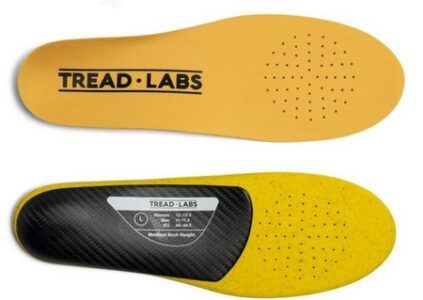
For those who need medical-grade rigidity without stepping up to a full custom orthotic, premium options like Tread Labs Carbon Fiber Insoles offer exceptional build quality and a level of stiffness that rivals prescription devices, making them a common choice for post-injury recovery and chronic cases (aff).
Tread Labs – Quick specs :
• Price range : ~$100-120
• Key features : 100% 3K carbon fiber, very rigid, premium finish, made in USA
• Best for : Medical use, post-injury recovery, cycling, severe cases
• User feedback : “The closest you’ll get to a custom orthotic in terms of rigidity.”
⭐ Premium medical-grade | Built to last
The cost question : Are carbon fiber insoles worth the money ?
A good pair of carbon fiber insoles costs between $80 and $180. That’s not pocket change.
So are carbon fiber insoles worth it is a fair question.
Vs. physiotherapy
- One physio session : $60-$120.
- A carbon insole might offer immediate relief, but it doesn’t strengthen your foot. Physio fixes the root cause.
Verdict : If you have to choose, invest in physio first. Buy the insoles later as a “performance enhancer.”
This is the honest answer to are carbon fiber insoles worth it for plantar fasciitis.
Vs. custom orthotics
- Custom orthotics : $200-$600 (often partially covered by insurance).
- Carbon insoles : $80-$180 (rarely covered).
This carbon fiber insoles vs custom orthotics cost comparison is important.
The smart money move :
If you have flat feet, buy the custom orthotics first. Then, if you have deep shoes, add a carbon plate on top.
This combo is expensive but unbeatable.
If you have neutral feet and mild fasciitis, try carbon insoles first.
They are cheaper than custom orthotics and might be enough.
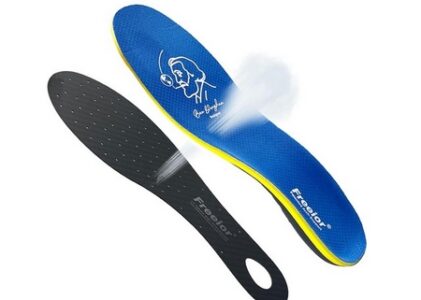
For those on a tighter budget, the Freeior Carbon Fiber Insole offers pure rigidity at around $30 – it slides under your existing insole, making it a low-risk way to test whether the technology works for you before investing in a premium model (aff).
Freeior – Quick specs :
• Price range : ~$25-35
• Key features : Ultra-thin (1.5mm), medical-grade rigidity, slides under your existing insole
• Best for : Post-operative recovery, hallux rigidus, turf toe, budget-conscious buyers
• User feedback : “Great way to test carbon technology without spending $100.”
💰 Lowest price point | Pure carbon plate
Beyond plantar fasciitis : Can carbon insoles help other foot problems ?
You’re here for fasciitis, but many readers have other issues.
Let’s address them quickly.
Carbon fiber insoles for metatarsalgia (Forefoot pain)
Metatarsalgia is pain in the “ball” of your foot.
Many people search for carbon fiber insoles for metatarsalgia hoping for relief.
- The good : A rigid carbon plate can reduce pressure on the metatarsal heads by distributing load better.
- The bad : If the pain is caused by a dropped metatarsal head, the plate won’t fix the underlying imbalance.
Verdict : Can help, but need good metatarsal padding underneath.
Carbon plates and Morton’s neuroma
Morton’s neuroma is a pinched nerve, usually between the 3rd and 4th toes.
The question carbon plates for morton’s neuroma is tricky.
- The risk : Narrow carbon fiber insoles can squeeze the forefoot and make neuroma pain WORSE.
- The solution : Only try this if you have wide toe box shoes and very flexible insoles.
Verdict : High risk. Proceed with extreme caution.
Do they help Achilles tendonitis ?
Indirectly, yes.
- By reducing calf strain? Not really. By making you faster? No.
- But if your Achilles pain is caused by overpronation, the carbon plate won’t fix it.
If it’s caused by tight calves, it won’t help either.
Verdict : Not a primary solution for Achilles issues.
Carbon insoles for sports performance
Carbon technology isn’t just for injury management.
For athletes engaged in explosive sports like basketball, volleyball, tennis, or sprinting, the appeal is pure performance: energy return, reduced muscle fatigue, and a more responsive push-off.
These athletes have different priorities than runners managing chronic pain.
They want the most aggressive springboard effect available, even if it means sacrificing some comfort or width compatibility.
The 2026 Sport Carbon Fiber Performance Insoles are built with this use case in mind (aff).
The energy return system is genuinely noticeable – users consistently report feeling the “spring” during explosive movements.
2026 Sport – Quick specs :
• Price range : ~$35-50
• Key features : High energy return (9.3% more explosivity claimed), muscle fatigue reduction
• Best for : High-intensity sports (basketball, volleyball, running), amateur athletes
• User feedback : “I feel the spring effect – especially in the second half of the game.”
⚡ Performance-focused | Narrow fit
Note: These run narrow, so they’re best suited for neutral to narrow feet.
Wide-footed athletes should consider the Pefuair mentioned earlier.
How to choose carbon fiber insoles for wide feet and flat feet
If you’re ready to try them, here is your practical checklist.
The 3-step buying guide
- Check your shoe volume FIRST : Take the original insole out of your shoe. Put your foot in.
If your foot spills over the edges, stop. You don’t have enough room for an extra rigid layer. - Look for “wide-friendly” models : Search specifically for best carbon insoles for wide feet reddit and read reviews from other wide-footed runners. Real user experiences are gold.
- Start slow : Never run a long race with new carbon plate insoles .
Do short 3-5km runs to let your calves and tendons adapt to the new rigid lever.
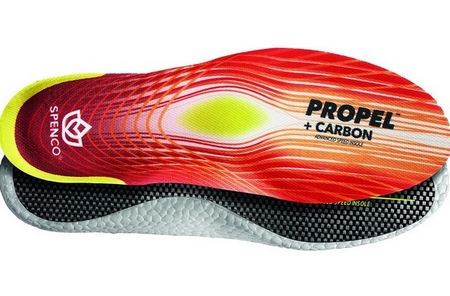
If you’re new to carbon technology and want a low-commitment entry point, the Spenco Propel+ Carbon Performance Insoles offer a solid introduction without the premium price tag – a great way to see if the springboard effect works for your gait (aff).
Spenco Propel+ – Quick specs :
• Price range : ~$40-45
• Key features : Carbon technology, lightweight, good arch support
• Best for : Daily use, moderate sports, normal to slightly high arches
• User feedback : “Perfect starter insole – showed me the technology worked before I upgraded.”
🌟 Best value for money | Entry-level friendly
3 mistakes to avoid
- Mistake 1 : Ignoring pain on the top of your foot (a sign of poor fit).
- Mistake 2 : Using them for walking all day (they are for dynamic movement).
People often ask “can you walk with carbon fiber insoles” – yes, but they’re not comfortable for casual use. - Mistake 3 : Thinking they replace treatment for plantar fasciitis.
The “2-week test” protocol : How to test your carbon insoles without injuring yourself
This is the safe, progressive method that nobody talks about. Follow it strictly.
Week 1 : Adaptation
- Day 1-3 : Wear them around the house for 1 hour. Check for hotspots.
Any pain on top of the foot? Stop immediately. - Day 4-7 : Short walk (20 minutes). Check for foot numbness or top-of-foot pain.
This is your how to fit carbon fiber insoles test period.
Week 2 : Light running
- Day 8-10 : First short run (2-3 km). Slow pace.
Focus on how your arch and heel feel. - Day 11-14 : Increase distance to 5 km. Evaluate.
What your body is telling you :
- If you feel pain on the TOP of your foot : Stop.Your shoes are too narrow or the insole is too thick. This is a common sign that carbon fiber insoles for wide feet are not working for you.
- If you feel knee pain : You might be overpronating without support.This confirms that “can you use carbon plates with flat feet” needs a “with orthotics” answer.
- If your fasciitis disappears : Congratulations, you found your ally.
Final verdict : Ally or mistake ?
| Your Profile | Verdict | Advice |
|---|---|---|
| Plantar Fasciitis, Neutral Arch | ✅ Ally | Great tool for pain-free running. |
| Plantar Fasciitis + Flat Feet | ⚠️ Proceed with Caution | Must combine with orthotics or strong arch support. |
| Plantar Fasciitis + Wide Feet | ⚠️ Possible | Only with high-volume shoes and careful selection. |
| Untreated Flat Feet (Overpronation) | ❌ Mistake | Fix the pronation first. |
| Metatarsalgia or Morton’s Neuroma | ⚠️ Risky | Test carefully with wide shoes. |
Carbon fiber insoles are high-performance tools, not miracles.
They can be an unexpected ally for plantar fasciitis , but they demand respect.
If you have flat feet or wide feet , your path is more complex.
Do your research, listen to your body, and don’t be afraid to combine them with orthotics .
The answer to “do carbon fiber insoles help plantar fasciitis” is ultimately : “Yes, for the right feet, used the right way.”
Quick reference : Which carbon insole for your foot type ?
| Foot type | Recommended model | Best for |
|---|---|---|
| Flat feet / overpronation | Superfeet Run | Hybrid support + carbon |
| Wide feet | Pefuair | Wide mold, zero heel drop |
| Severe / chronic cases | Tread Labs | Medical-grade rigidity |
| Budget / testing | Freeior | Pure carbon plate, under $30 |
| Performance sports | 2026 Sport | Energy return, narrow fit |
| Beginners / mild cases | Spenco | Entry-level, low commitment |
* See the detailed recommendations in each section above.
FAQ – Carbon fiber insoles
Can you walk with carbon fiber insoles ?
You can, but they are not designed for casual walking. Carbon insoles feel stiff and unnatural for walking because they lack the flexibility needed for a natural gait. They truly shine during dynamic activities like running where the spring effect matters, so if you need all-day comfort, consider semi-rigid alternatives instead.
Do carbon fiber insoles need a break-in period ?
Yes, most carbon fiber insoles require a short adaptation period of about one week.
Start by wearing them for just one to two hours at home, then gradually increase duration.
Your feet and gait need time to adjust to the rigidity, and some users experience mild arch discomfort initially which typically subsides within a few days.
Can I use carbon fiber insoles in any shoes ?
No, they only work in shoes with removable insoles and sufficient depth. Remove the original insole first and check if your foot sits too high or feels compressed.
They fit well in most running shoes and athletic footwear, but rarely work in dress shoes, high heels, or very shallow casual shoes.
How do I clean and maintain carbon fiber insoles ?
Hand wash them with mild soap and water, then air dry completely – never machine wash or dry.
Most quality carbon insoles have antimicrobial coatings that prevent odor, but avoid harsh chemicals.
With proper care, they typically last 500 to 800 miles, often outlasting several pairs of shoes.
Are expensive carbon fiber insoles better than cheap ones ?
Not necessarily for everyone. Premium models offer better materials and often combine carbon with quality foam layers, while budget options provide pure rigidity without cushioning.
Choose based on your specific use case rather than price alone, as cheap insoles can work well for medical needs under existing insoles.
Can carbon fiber insoles replace custom orthotics ?
Generally no, they serve different purposes. Carbon insoles focus on energy return and forefoot rigidity, while custom orthotics correct specific biomechanical issues like severe overpronation.
However, quality over-the-counter options work as well as custom orthotics for most common conditions like plantar fasciitis, at a fraction of the cost.
Do carbon fiber insoles work for high arches ?
Yes, they work for high arches too, but you need the right design.
Look for models with a recessed area under the first metatarsal head, as excessively high arch support can actually increase pressure on the lateral column.
Some brands offer specific versions for cavus feet, or consider heat-moldable options for a custom fit.
Will carbon fiber insoles make my shoes tighter ?
They can, especially if your shoes already fit snugly.
Carbon insoles are typically thinner than gel alternatives, but they still add volume to your shoe.
If your shoes are borderline tight, try sizing up a half size or choose ultra-thin models designed to sit beneath your existing insole.
Can I use carbon fiber insoles for sports other than running ?
Absolutely, they work great for basketball, soccer, tennis, cycling, and hiking.
For court sports, look for designs with lateral stability features, while for cycling, the extreme rigidity improves power transfer.
Just match the insole type to your activity for the best results.

Marie – FlatFeetSolutions
Flat feet, wide feet or plantar fasciitis? Like you, I'm tired of useless advice.
On this site, I share practical solutions, shoe tests and tips based on my experience and extensive research. My goal: to help you make informed choices for more comfort in daily life.
📌 Important: My advice is informative. For any foot health problem, always consult a podiatrist.
