
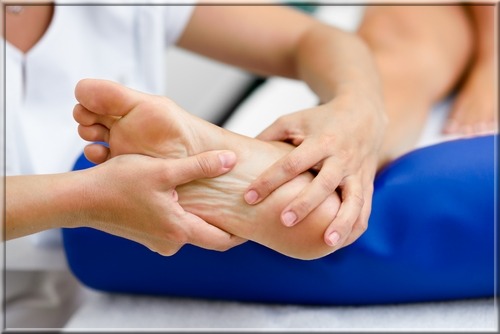
If you have flat feet (pes planus), you’re at higher risk for plantar fasciitis—a painful inflammation of the thick band of tissue running along the bottom of your foot. Without proper care, plantar fasciitis recurrence is common.
This complete prevention guide answers key questions about flat feet and plantar fasciitis, covering the best shoes, orthotics, stretches, and daily habits to keep heel pain away for good.
Why do flat feet cause plantar fasciitis?
Flat feet lack a natural arch, leading to overpronation (excessive inward rolling of the foot).
This strains the plantar fascia, causing micro-tears and inflammation.
Key risk factors for plantar fasciitis recurrence:
- Poor arch support (walking barefoot or in unsupportive shoes)
- Tight calves & Achilles tendon (pulling on the plantar fascia)
- Weak foot muscles (unable to absorb shock properly)
- Sudden increases in activity (running, long standing hours)
- Excess weight (adds pressure to the plantar fascia)
How can I prevent plantar fasciitis from coming back?
What are the best shoes for flat feet and plantar fasciitis?
If you suffer from flat feet and plantar fasciitis, choosing the right footwear isn’t just about comfort—it’s essential for preventing pain and stopping recurrence.
The wrong shoes can worsen strain on your plantar fascia, while proper supportive footwear helps distribute pressure evenly and reduce inflammation.
Why shoe choice matters for flat feet and plantar fasciitis
Flat feet lack a natural arch, causing the foot to roll inward excessively.
This misalignment puts extra stress on the plantar fascia, leading to micro-tears and chronic heel pain.
Supportive shoes help correct this imbalance.
✔ Firm arch support – Prevents excessive stretching of the plantar fascia
✔ Motion control/stability – Limits overpronation
✔ Cushioned heels – Absorbs shock from impact
✔ Structured design – Supports proper foot alignment
Top recommended shoes for flat feet and plantar fasciitis
Based on podiatrist recommendations and customer reviews, these best shoes for plantar fasciitis provide excellent support:
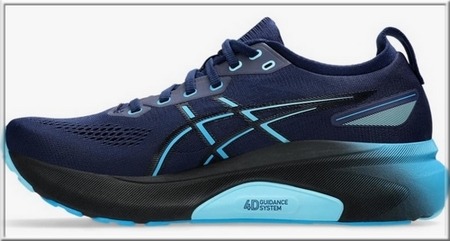
- Brooks Adrenaline GTS – A top-rated stability shoe with GuideRails technology to prevent overpronation.
- ASICS Gel-Kayano – Features Dynamic DuoMax support and gel cushioning for shock absorption.
- New Balance 1540v3 – A motion-control shoe with a rigid arch for severe overpronation.
- Hoka One One Arahi – Combines plush cushioning with a J-Frame stability system for lightweight support.
- Vionic Walker Classic – Designed with podiatrist-approved orthotic arch support, ideal for all-day wear (aff).
Features to look for in plantar fasciitis shoes
When shopping for shoes for flat feet and plantar fasciitis, prioritize these key elements:
✔ Firm midsole (avoid overly flexible shoes)
✔ Deep heel cup (stabilizes the foot)
✔ Removable insoles (to accommodate custom orthotics)
✔ Wide toe box (prevents crowding and allows natural toe movement)
Shoes to avoid with plantar fasciitis
❌ Flip-flops & flat sandals – Offer no arch support
❌ Ballet flats & thin-soled shoes – Lack cushioning
❌ Worn-out shoes – Lose support after 300–500 miles
❌ High heels – Shorten the Achilles tendon and increase strain
Bonus tip: Don’t go barefoot – even at home!
Walking barefoot (even on carpet) increases tension on the plantar fascia.
Instead, wear supportive slippers with arch support, such as:
- Oofos Recovery Sandals – great shock absorption
- Vionic Relax Slippers – built-in orthotic support (aff)
Invest in the right shoes for long-term relief
Since flat feet and plantar fasciitis require ongoing care, wearing proper footwear daily is one of the most effective ways to prevent pain.
If standard shoes aren’t enough, consider custom orthotics for plantar fasciitis for added support.
Do orthotics help with flat feet and plantar fasciitis?
If you suffer from flat feet and plantar fasciitis, orthotics can be a game-changer for pain relief and prevention.
Why orthotics work for flat feet and plantar fasciitis
Orthotics address the root causes of plantar fasciitis in flat feet by:
✔ Reducing overpronation (excessive inward rolling)
✔ Providing arch support where your foot naturally lacks it
✔ Distributing pressure evenly across your foot
✔ Absorbing shock during walking and running
✔ Improving overall biomechanics to prevent future injuries
Types of orthotics: Which is right for you?
– Custom orthotics (Podiatrist-Prescribed)
- Best for: Severe flat feet, chronic plantar fasciitis, or abnormal foot structure
– Process: Your podiatrist takes a 3D scan or mold of your foot to create inserts tailored to your exact arch height and pressure points
– Benefits:
- Perfectly matches your foot’s contours
- Corrects specific alignment issues
- Made from durable medical-grade materials
- Often covered by insurance for plantar fasciitis treatment
– Drawbacks:
- More expensive ($300−600 per pair)
- Requires 2-3 week waiting period
– Over-the-counter arch supports
- Best for: Mild to moderate flat feet, early-stage plantar fasciitis, or budget-conscious users
– Top brands:
- Powerstep Pinnacle: Firm arch support with deep heel cup
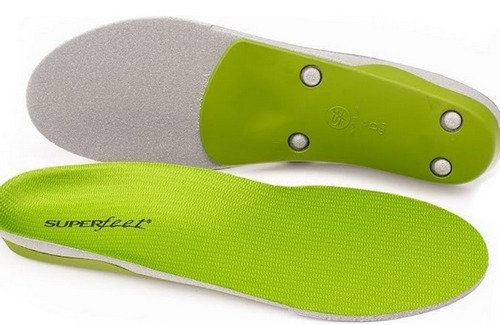
- Superfeet Green: High-profile support for severe overpronation
- Vionic Active: Podiatrist-designed with built-in motion control (aff)
– Benefits:
- Immediately available
- Affordable ($40−60)
- Can be replaced easily
– Drawbacks:
- Less precise than custom options
- May need trial-and-error to find perfect fit
When to choose custom orthotics for plantar fasciitis
Consider investing in custom orthotics if:
- You’ve had plantar fasciitis for more than 3 months
- Over-the-counter inserts don’t provide enough relief
- You have significantly different arch heights in each foot
- You spend long hours on your feet for work
- You’re an athlete with recurrent foot pain
Pro tips for using orthotics effectively
- Break them in slowly – Start with 1-2 hours daily
- Bring them shoe shopping – Ensure your footwear accommodates the orthotics
- Replace regularly – OTC inserts every 6-12 months, custom every 2-5 years
- Combine with proper shoes – Even the best orthotics need supportive footwear
- Use consistently – Wear them in all shoes, including work footwear
The bottom line on orthotics for plantar fasciitis
While over-the-counter arch supports can help mild cases, custom orthotics for flat feet provide the most effective, long-term solution for persistent plantar fasciitis.
Many patients find that combining orthotics with proper footwear, stretching, and strengthening exercises creates the perfect trifecta for pain-free feet.
Consult a podiatrist if you’re unsure which option is right for you – they can assess your gait and recommend the ideal level of support for your specific foot structure and lifestyle needs.
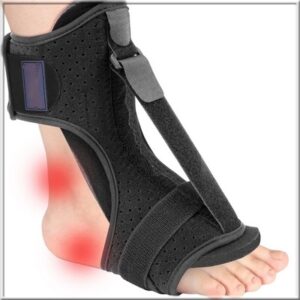
Do night splints work for plantar fasciitis?
Why night splints work so effectively
Night splints address the root cause of morning heel pain by maintaining what’s called the “neutral foot position” while you sleep.
Here’s the science behind their effectiveness:
– Prevents the plantar fascia from contracting
- During sleep, feet naturally point downward (plantar flexion)
- This allows the fascia to shorten and tighten overnight
- Splints maintain a gentle 90-degree angle
– Promotes healing in optimal position
- Keeps mild tension on the fascia for 6-8 hours
- Allows microtears to heal at proper length
- Reduces reinjury risk with first morning steps
– Clinical evidence of effectiveness
- Studies show 80% of patients report significant improvement
- Reduces morning pain by 60-70% when used consistently
- Works best when combined with daytime stretching
Choosing the right night splint: Detailed comparison
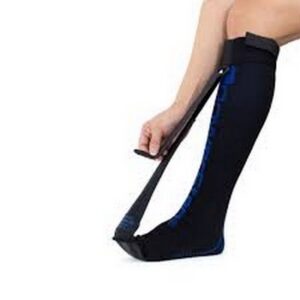
1. The Strassburg sock (Best for comfort & travel)
Key Features:
- Soft, breathable fabric construction
- Adjustable strap system for customized tension
- Lightweight design (only 4 oz)
- Machine washable for easy care
Best for:
- Side sleepers
- Those new to night splints
- Travelers needing portable solution
- Patients with circulation concerns
Usage tips:
- Start with looser tension, gradually increase
- Wear over thin socks to prevent irritation
- Expect 2-3 week adjustment period
→ Strassburg socks for plantar fasciitis (aff)
2. Rigid night splints (Most effective for severe cases)
Key features:
- Hard plastic or metal frame maintains exact angle
- Padded interior for comfort
- Adjustable straps for secure fit
- More substantial correction than fabric options
Best for:
- Chronic plantar fasciitis (6+ months)
- Significant morning pain (>30 minutes stiffness)
- Those who’ve failed with softer options
- Patients with limited daytime treatment time
Usage tips:
- Apply moisturizer before wearing to prevent skin irritation
- Start with 2-3 hours nightly, work up to full night
- Combine with heel pads for daytime wear
Advanced usage protocols for best results
Progressive treatment plan:
- Weeks 1-2: Wear 3-4 hours nightly
- Weeks 3-4: Increase to 6 hours
- Week 5+: Full night wear as tolerated
Enhancement strategies:
Pre-sleep routine:
- Warm foot soak before splint application
- Apply anti-inflammatory gel
- Perform gentle stretches
Morning transition:
- Keep splint on for first few steps
- Follow with frozen water bottle massage
- Wear supportive slippers immediately
→ Night splints for plantar fasciitis (aff)
Common challenges and solutions
Problem: Difficulty sleeping with splint?
Solution: Start with daytime wear, progress to naps, then nighttime
Problem: Skin irritation?
Solution: Use moisture-wicking socks, alternate splint types
Problem: Calf discomfort?
Solution: Add gentle calf stretches before application
When to expect results
- First week: Reduced “first step” pain intensity
- 2-3 weeks: Shorter duration of morning stiffness
- 4-6 weeks: Noticeable improvement in daily comfort
Important precautions
Consult your podiatrist before use if you have diabetes or peripheral neuropathy, circulatory disorders, severe arthritis in ankle/foot and open wounds or skin lesions
By committing to consistent night splint use for 6-8 weeks, most patients experience significant long-term improvement in plantar fasciitis symptoms and prevention of recurrence.
What are the best stretching exercises for plantar fasciitis?
If you suffer from plantar fasciitis, tightness in your calves and Achilles tendons could be secretly sabotaging your recovery.
Here’s why this happens and exactly how to fix it:
The muscle chain reaction: Why tightness causes heel pain
Your calves (gastrocnemius and soleus muscles) connect to your Achilles tendon, which attaches to your heel bone – the same bone where your plantar fascia originates.
When these structures become tight:
- They pull upward on your heel bone
- This creates constant tension on your plantar fascia
- The fascia becomes overstretched and inflamed
- Result: Worsening heel pain that lingers
This explains why many people feel their worst pain in the morning – after hours of the plantar fascia being held in a shortened position.
The 3 essential stretches for lasting relief
These clinically-proven stretches target the entire posterior chain to relieve tension:
1. Wall calf stretch (Best for gastrocnemius)
- Stand facing a wall, hands at eye level
- Step one foot back, keeping heel flat and knee straight
- Lean forward until you feel a stretch in your calf
- Hold 30 seconds, repeat 3x per leg
Pro tip: Do this first thing in the morning before walking
2. Bent-knee calf stretch (Targets soleus muscle)
- Same position as above, but bend both knees
- Keep back heel firmly planted
- You’ll feel the stretch lower in your calf
- Hold 30 seconds, 3x per leg
Why it works: The soleus connects directly to the Achilles
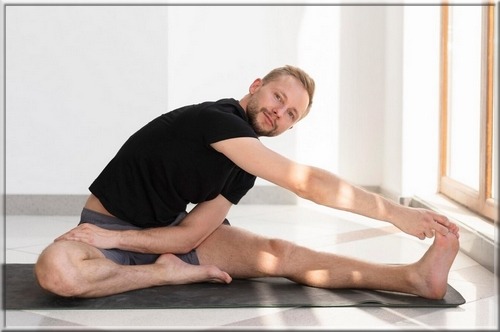
3. Towel stretch (Direct plantar fascia release)
- Sit with legs straight, loop towel around ball of foot
- Gently pull toes toward you until you feel stretch
- For deeper release, point and flex toes while holding
- Hold 30 seconds, repeat 5x per foot
Bonus: Do this while watching TV for easy consistency
When and how often to stretch
For best results:
- Morning: Do all 3 stretches before your first steps
- Evening: Repeat before bed
- After sitting: Quick towel stretches every 2-3 hours
- Post-activity: Always stretch after exercise
Advanced techniques for stubborn cases
If standard stretches aren’t enough:
- Eccentric heel drops (strengthen while stretching)
- Night splints (maintain stretch while sleeping)
- Graston technique (professional soft tissue release)
Signs your stretching is working
Within 2-4 weeks of consistent stretching, you should notice:
- Less morning pain
- Improved walking comfort
- Increased ankle flexibility
- Decreased tenderness in your arch
Remember: Consistency is key. These stretches only work if done daily.
Pair them with supportive shoes and activity modification for best results against plantar fasciitis.
How can massage and ice therapy help?
When dealing with plantar fasciitis, inflammation and scar tissue formation are two primary obstacles to healing.
Here’s why targeted cold therapy and massage work so effectively:
How these methods accelerate healing
– Cold therapy benefits:
- Constricts blood vessels (reducing swelling)
- Numbs nerve endings (decreasing pain signals)
- Slows metabolic rate in injured tissue
- Breaks the pain-spasm cycle
– Massage therapy benefits:
- Increases blood flow to promote healing
- Breaks down adhesions in the fascia
- Stimulates tissue regeneration
- Improves flexibility and range of motion
Advanced techniques for maximum relief
1. Frozen water bottle therapy (Cryomassage)
Enhanced protocol:
- Fill bottle 3/4 with water + 1/4 rubbing alcohol (for colder temp)
- Freeze horizontally for even cooling surface
- Roll slowly from heel to ball of foot
- Pause 10 seconds on tender spots
Frequency: 2-3 times daily (especially after activity)
Pro Tip: Add textured surface by freezing bottle in a sock filled with rice for simultaneous acupressure
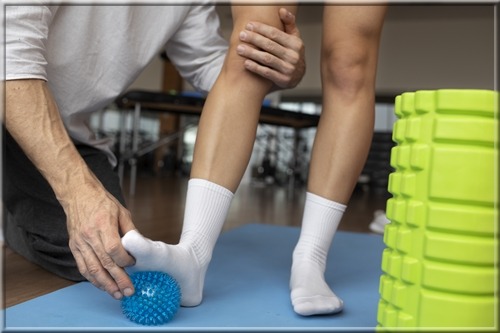
2. Golf ball massage (Myofascial release)
Advanced technique:
- Start with gentle pressure (2/10 pain scale)
- Make small clockwise circles along entire arch
- Focus on the “hot spot” near the heel
- Gradually increase pressure as tolerated
- Duration: 3-5 minutes per foot
Variations:
- Use a Lacrosse ball for deeper pressure (aff)
- Try a spiked massage ball for enhanced tissue release
- Combine with topical arnica gel for added anti-inflammatory effect
Therapeutic protocol for best results
Acute phase (First 2 weeks):
- Ice massage every 4-6 hours
- Gentle massage 2x daily
- Always end with light stretching
Recovery phase (Weeks 3-6):
- Transition to contrast therapy (alternate hot/cold)
- Increase massage pressure
- Add dynamic movements during massage
When to avoid these therapies
Consult your doctor before using if you have peripheral neuropathy, circulatory disorders, skin conditions in the treatment area and severe swelling or open wounds.
Complementary therapies to enhance results
– After ice/massage:
- Apply magnesium oil to feet
- Wear compression socks for 1-2 hours
- Perform gentle range-of-motion exercises
– Before bed routine:
- Warm foot soak with Epsom salts
- 5 minutes of massage
- Night splint application
Tracking your progress
Keep a treatment log noting:
- Pain levels before/after
- Duration of relief
- Changes in morning stiffness
- Improved mobility
Expected timeline:
- Week 1: Reduced acute pain
- Week 3: Decreased morning stiffness
- Week 6: Improved walking comfort
By combining these techniques with your overall treatment plan, you’ll accelerate healing while preventing future flare-ups.
Which foot strengthening exercises help prevent plantar fasciitis?
The muscles in your feet serve as a dynamic support system for your arches.
When these muscles are weak, your plantar fascia bears excessive strain, leading to inflammation and pain.
Strengthening these muscles creates a “natural orthotic” effect that:
✔ Reduces dependence on passive arch support
✔ Improves shock absorption during walking/running
✔ Enhances proprioception (foot position awareness)
✔ Prevents excessive flattening of the arch
The 5 best foot-strengthening exercises for plantar Fasciitis
1. Towel scrunch (Targets: Intrinsic foot muscles)
Place a hand towel flat on smooth flooring
Sit barefoot with feet on the towel
Scrunch towel toward you using only toes
Hold peak contraction for 2 seconds
3 sets of 10 reps per foot
Progression: Place a light weight on towel
2. Marble pickups (Targets: Toe flexors, arch stabilizers)
Place 10-20 marbles next to a bowl
Use toes to pick up one marble at a time
Transfer to bowl without dropping
Complete all marbles, then switch feet
Advanced: Use smaller objects like dice
3. Heel raises (Targets: Calf muscles, arch support system)
Stand with feet shoulder-width apart
Slowly rise onto toes (3 seconds up)
Hold top position for 2 seconds
Lower with control (3 seconds down)
3 sets of 15 reps
Variations:
– Single-leg for advanced challenge
– On stairs for increased range
4. Doming exercise (Targets: Deep arch muscles)
Sit barefoot with foot flat on floor
Keep toes relaxed and in contact with ground
Lift arch upward without curling toes
Hold for 5 seconds
10 reps per foot, 3 sets
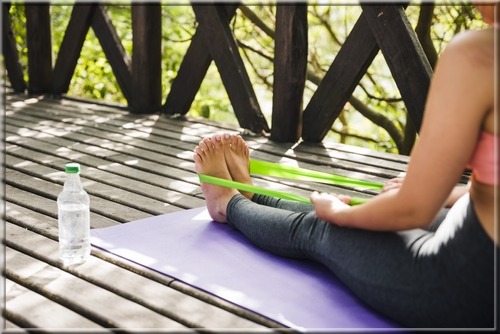
5. Resistance band toe pulls (Targets: Dorsiflexors)
Loop resistance band around a fixed object
Place band over toes while sitting
Pull toes toward you against resistance
3 sets of 12 reps per foot
Optimal training protocol
For best results:
- Frequency: 4-5 sessions per week
- Progression: Increase difficulty every 2 weeks
- Combination: Pair with daily stretching
- Recovery: Allow 1 rest day between sessions
Signs of improvement
Within 4-6 weeks, you should notice:
- Reduced arch fatigue at day’s end
- Improved balance during single-leg stance
- Decreased morning heel pain
- Greater comfort when walking barefoot
Important note: These exercises may feel challenging initially if your foot muscles are weak.
Start gently and gradually increase intensity to avoid overexertion.
For optimal results, combine this strengthening program with proper footwear and orthotic support as needed.
Consistent practice of these exercises can significantly reduce your risk of plantar fasciitis recurrence by creating stronger, more resilient feet better equipped to handle daily demands.
When should I see a doctor for plantar fasciitis?
Seek help if:
- Pain lasts more than 6 weeks despite home care.
- You experience severe swelling or numbness.
- You need custom orthotics or physical therapy.
Final tips to stop plantar fasciitis from coming back
Stay pain-free with these essentials
- Wear supportive shoes daily (prioritize arch support and heel cups).
- Use orthotics if needed (custom for severe cases).
- Stretch and strengthen (focus on calves and foot muscles).
- Avoid barefoot walking—even at home.
- Consider night splints if morning pain lingers.
- Even modest weight loss reduces strain
If pain persists after 6 weeks of consistent care, schedule a gait analysis with a podiatrist.
Your questions about flat feet and plantar fasciitis
Can plantar fasciitis cause pain in other areas like the knees or hips?
Absolutely. When you have flat feet, the lack of proper arch support can lead to overpronation, which misaligns your entire lower body. This often results in added stress to the knees (especially the inner side) and may even contribute to hip discomfort due to compensatory movements. Addressing plantar fasciitis with proper footwear and orthotics can help alleviate these secondary pains.
Can children with flat feet develop plantar fasciitis?
It’s uncommon but possible, especially in active kids with flexible flat feet that persist beyond age 6. Risk factors include obesity, poor footwear, or high-impact sports. Pediatric arch supports and supportive athletic shoes can help prevent issues. Look for shoes with stiff soles and arch support for active kids (e.g., Saucony Guide or ASICS GT-1000).
Why does my plantar fasciitis flare up in cold weather?
Cold temperatures can reduce circulation to the feet and cause muscles and ligaments to tighten, increasing tension on the plantar fascia. To minimize pain, wear warm, supportive slippers indoors, stretch before getting out of bed, and consider using a heating pad on your calves.
Is surgery ever necessary for plantar fasciitis caused by flat feet?
Surgery is rare (recommended for <5% of cases) and only considered after 12+ months of failed conservative treatments. Less invasive options like shockwave therapy are typically tried first.
Can I still run or exercise with plantar fasciitis?
Yes, but modify your routine. Opt for low-impact activities like swimming or cycling, and avoid hard surfaces. Always wear supportive shoes and stretch thoroughly afterward.

Marie – FlatFeetSolutions
Flat feet, wide feet or plantar fasciitis? Like you, I'm tired of useless advice.
On this site, I share practical solutions, shoe tests and tips based on my experience and extensive research. My goal: to help you make informed choices for more comfort in daily life.
📌 Important: My advice is informative. For any foot health problem, always consult a podiatrist.
