
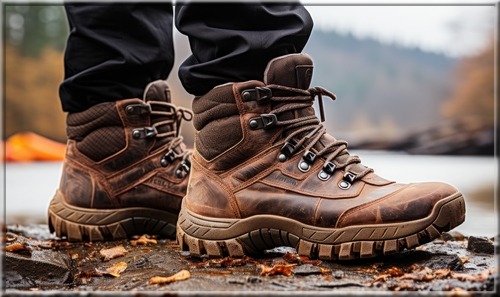
Do your feet hurt after every shift?
If you have wide feet, standard safety shoes can feel like they were designed for someone else.
Millions of workers with wide feet face the same struggle: cramped toes, blisters, and fatigue that makes every step a chore.
You don’t have to suffer.
The right pair of wide safety shoes exists and this guide will help you find them.
Here’s what you’ll learn:
- How to choose the right width (2E, 4E, and beyond)
- Safety standards explained (S1P, S3, SRC – what you actually need)
- Our top tested picks for construction, warehouse, and standing work
- Maintenance tips to make your shoes last
Ready to work pain-free? Let’s find your perfect fit.
Why invest in adapted safety shoes?
Risks of too-narrow shoes
- Chronic pain: Toe compression leads to bunions, corns and ingrown nails
- Posture problems: Misalignment causes musculoskeletal disorders (back, knees, hips)
- Excessive sweating: Increased risk of fungal infections and odors
Benefits of specialized models
Wide-fit safety shoes offer:
- Immediate comfort: No “breaking in” period
- Better safety: Optimal support without compression
- Improved productivity: Fewer needed breaks
Who needs wide safety shoes? Affected professions
Certain professions demand extra-wide safety footwear due to long hours and specific hazards:
- Construction/sites: Choose high-top wide safety shoes with S3 rating
- Warehousing/workshops: Opt for lighter low-cut wide safety shoes
- Manufacturing: Look for anti-fatigue features for standing all day
- Logistics: Prioritize slip resistance and breathability
How to choose wide safety shoes? Complete selection guide
Finding the right extra wide fitting safety shoes requires attention to several key factors :
Criterion 1: Actual width – Understanding sizing
Look for these labels and understand what they mean :
| Width Label | Meaning | Best For |
|---|---|---|
| “Wide” (EE / 2E) | Standard wide width | Moderately wide feet |
| “Extra Wide” (4E) | For very wide feet | Significantly wide feet |
| “Large Fit” | Select brands only | Brand-specific sizing |
Critical warning: Never buy a size up to gain width! This creates a dangerous tripping hazard and misaligns the flex point with your foot.
Criterion 2: Safety standards explained
| Standard | Protection | Recommended |
|---|---|---|
| S1P | Basic anti-puncture | Workshops, office environments, light industry |
| S3 SRC | Anti-puncture + slip-resistant + waterproof | Construction sites, outdoor work, wet environments |
Criterion 3: Daily comfort features
- Materials: Soft leather or technical breathable fabric
- Sole: Cushioned (Vibram type) + anti-slip
- Weight: < 500g per foot for optimal comfort
- Arch support: Especially important if you also have flat feet
Our tip :
“Always try comfortable wide safety shoes at day’s end when feet are naturally swollen.”
Top 5 spacious safety shoes – Detailed comparison
Here’s our detailed ranking of the best safety shoes for wide feet, tested for comfort, durability, and protection:
Reebok Sublite Cushion Work SR (S3) – Best for wet conditions
For whom?
– Construction crews, outdoor workers, and wet environments
Key features
✅ Supportive cushioning: Sublite foam sole for all-day comfort on hard surfaces
✅ Composite toe: Lightweight protection (520g size 8.5)
✅ Waterproof build: Full-grain leather + sealed seams for rainy sites
✅ Breathable lining: Moisture-wicking mesh keeps feet dry
✅ S3 SRC rating: Anti-puncture + slip-resistant + waterproof
Technical specs
- Width: Wide fit
- Height: Mid-cut (ankle support)
- Unisex model
Expert review:
“Designed for tough conditions, the Sublite Cushion Work SR trades some lightness for superior waterproofing and underfoot cushioning. Its wider toe box accommodates broad feet, making it ideal for outdoor trades. The trade-off? Slightly less airflow in summer heat.”
→ Reebok Sublite Cushion Work SR (aff)
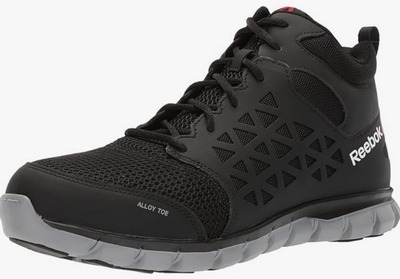
Carhartt Rugged Flex WP (S3) – Toughest durability
For whom?
Outdoor workers in harsh, wet conditions (construction, agriculture, oil/gas)
Key features
✅ Waterproof protection: 100% waterproof membrane
✅ Rugged Flex sole: Maintains flexibility for natural movement
✅ Composite toe: Lighter than steel (meets ASTM standards)
✅ Abrasion-resistant leather: Reinforced stitching for heavy-duty use
✅ S3 SRC rating: Anti-puncture + slip-resistant + waterproof
Technical specs
- Weight: 540g (size 8.5)
- Height: 6″ boot
- Width: Wide fit
Expert review:
“The Rugged Flex WP combines Carhartt’s signature toughness with a fully waterproof membrane, making it a top choice for muddy or wet job sites. The 6-inch height prioritizes mobility over ankle coverage, while the Rugged Flex sole maintains natural movement. Perfect for trades that demand dryness without compromising durability.”
→ Carhartt Rugged Flex WP (aff)
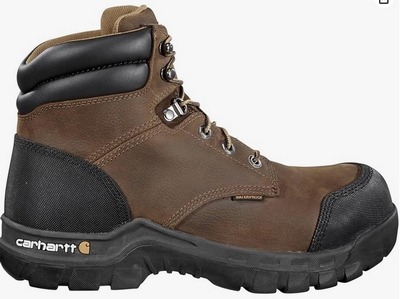
Reebok Astroride (S1P) – Lightweight warehouse choice
For whom?
Technicians, warehouse staff, mobile professions
Key features
✅ AstroRide sole: Running shoe-like cushioning
✅ Wide composite toe: Light and spacious
✅ Breathable textile upper: Maximum airflow
✅ S1P rating: Ideal for workshops and warehouses
Technical specs:
- Weight: 430g (size 8.5)
- Height: Low-cut
Expert review:
“With its running-inspired sole and wide composite toe, this model is favored for frequent warehouse movement. The S1P rating limits its use to environments without severe water or puncture risks.”
→ Reebok Astroride Safety (aff)
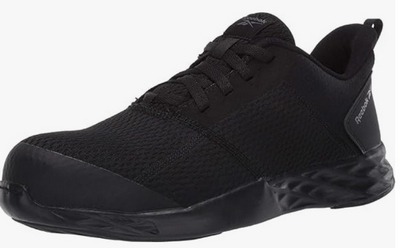
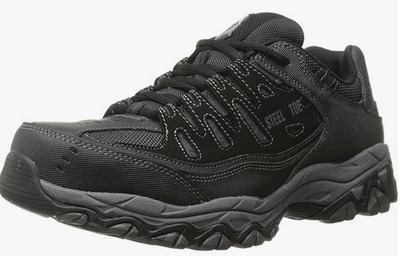
Skechers Cankton Work Shoe (SD) – Urban technician favorite
For whom?
Electricians, technicians, and urban workers needing agile footwear
Key features
✅ Featherlight: Only 370g (size 8.5)
✅ Steel toe: Meets ASTM standards
✅ Memory foam insole: All-day comfort for standing work
✅ Breathable mesh panels: Enhanced airflow in warm environments
✅ SD rating: Oil- and slip-resistant outsole
Technical specs:
- Width: Wide (available in EE widths)
- Height: Low-cut (ankle freedom)
- Materials: Synthetic mesh + steel toe
Expert review:
“This Skechers Cankton model outperforms many urban safety shoes with its shock-absorbing memory foam and wider toe box. The steel toe adds durability for job sites, while the SD-rated sole handles garage fluids.”
→ Skechers Cankton Work Shoes (aff)
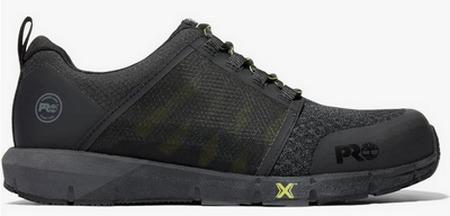
Timberland PRO Radius – Orthopedic comfort for standing
For whom?
Standing workers (factories, workshops, healthcare)
Key features
✅ Anti-fatigue technology: Energy-return sole
✅ Extra-wide composite toe: For very wide feet
✅ Durable supple leather: No break-in needed
✅ S1P rating: Workshop protection
Technical specs:
- Weight: 470g (size 8.5)
- Height: Low-cut
Expert review:
“Featuring an extra-wide toe box and anti-fatigue sole, this shoe suits prolonged standing (factories, healthcare). Its premium price reflects high-end materials, but the S1P rating doesn’t cover outdoor hazards.”
→ Timberland Radius (aff)
Comparison table – Quick overview
| Model | Weight | Rating | Width | Price | Best for |
|---|---|---|---|---|---|
| Reebok Sublite Cushion Work SR | 520g | S3 SRC | Wide | $130-150 | Wet construction sites |
| Carhartt Rugged Flex WP | 540g | S3 SRC | Wide | $170-180 | Heavy outdoor work |
| Reebok Astroride | 430g | S1P | Standard + | $100-110 | Warehouse/logistics |
| Skechers Cankton Work | 370g | SD | Wide (EE) | $90-100 | Urban technicians |
| Timberland PRO Radius | 470g | S1P | Extra-Wide | $150-170 | Standing all day |
Top picks by need
- For construction/wet conditions → Reebok Sublite Work SR
- For heavy-duty outdoor work → Carhartt Rugged Flex WP
- For lightweight comfort → Skechers Cankton
- For very wide feet → Timberland PRO Radius
- For budget buy → Skechers Cankton
- For running shoe feel → Reebok Astroride
Maintenance and durability: Pro tips
Proper care extends the life of your comfortable wide safety shoes.
Follow these maintenance tips:
Material-specific cleaning
For leather shoes:
Basic cleaning:
- Use a slightly damp microfiber cloth to remove dirt.
- Avoid harsh products (bleach, solvents) that dry leather.
Monthly conditioning:
- Apply nourishing wax or leather cream (e.g. Saphir, Lexol) to prevent drying/cracking.
- Focus on flex points (toe, ankle) to maintain softness.
Extra protection:
- Waterproof spray (e.g. Nikwax) enhances water resistance, especially for outdoor work.
For textile/mesh shoes:
Regular cleaning:
- Brush dirty areas with soft brush and textile cleaner (e.g. Jason Markk).
- For tough stains, use warm water + mild soap, but rinse quickly.
Drying:
- Always air dry after use (remove insoles if possible).
- Avoid direct heat (radiators, intense sun) that warps materials.
Disinfection :
- Antibacterial spray (e.g. Scholl Fresh Step) reduces odors and fungal risks.
When to replace safety shoes
- Damaged toe cap: Deep scratches or deformation compromises protection.
- Worn sole:
- Tread depth < 1 mm (lost traction).
- Collapsed insole (reduced support).
- New pains: Sign that support/cushioning has degraded.
Average lifespan: 6-12 months with heavy use (varies by brand/maintenance).
Pro tip:
“Rotation: Alternate between two pairs to extend lifespan. Materials need 24h to fully dry.”
Why these tips?
- Unmaintained leather cracks, reducing protection and comfort.
- Dirty textiles lose breathability, promoting sweat and bacteria.
With these practices, your shoes will maintain performance and hygiene longer while optimizing your investment.
Find comfortable safety shoes for wide feet at last
Choosing well-fitting wide safety shoes is no longer a puzzle thanks to this guide.
You now know:
✔ Which models to choose by profession (construction, warehousing, workshops…)
✔ How to decode safety ratings (S1P, S3, SD) for optimal protection
✔ What criteria to check before buying (width, materials, weight)
✔ How to maintain your shoes to extend their life
Investing in properly fitted shoes means:
→ Protecting your health (avoid MSDs, pain, fungal infections)
→ Gaining comfort and thus productivity
→ Saving money (fewer frequent replacements)
Our final recommendation:
“Never sacrifice comfort for safety – they go hand in hand. Always try multiple models and prioritize quality for your wide feet.”
Your wide fir safety footwear questions
Are there safety shoes for both wide AND flat feet?
Yes, several brands offer models specifically designed for this dual need. These shoes typically feature reinforced arch support along with a sufficiently wide toe box. Solutions include models with removable orthotic insoles or specialized technologies like Timberland PRO’s “Anti-Fatigue” system. Look for “arch support” or “orthotic friendly” in product descriptions.
Can standard safety shoes be adapted for wide feet?
While ideally you should choose shoes specifically designed for wide feet, some solutions exist to slightly widen standard shoes. Professional cobblers can stretch the material, especially effective on leather. Some specialty stores also offer softening sprays and stretching devices. However, these methods have limits and shouldn’t compromise safety features.
Are wide safety shoes less stylish?
This stereotype is outdated. Many brands have significantly improved the aesthetics of their wide models. Reebok’s Work N Cushion proves you can combine width, safety and style. Some models are nearly indistinguishable from regular urban shoes while offering full protection.
How to verify true width before online purchase?
Several methods help assess actual width. Carefully check manufacturers’ sizing charts which often provide millimeter measurements. Some specialty sites offer virtual sizing tools. Don’t hesitate to contact customer service for exact toe box dimensions. Free returns are also important to try multiple pairs.
What’s the average price for good wide safety shoes?
Expect $100-180 for quality pairs. Entry-level models under $100 exist but typically offer fewer width options. The investment pays off through better durability and comfort. Some professional health plans or employers may contribute – check available assistance programs.
Resources:
– Protective footwear standards (ASTM F2413)
– EN ISO 20345 safety standard updates

Marie – FlatFeetSolutions
Flat feet, wide feet or plantar fasciitis? Like you, I'm tired of useless advice.
On this site, I share practical solutions, shoe tests and tips based on my experience and extensive research. My goal: to help you make informed choices for more comfort in daily life.
📌 Important: My advice is informative. For any foot health problem, always consult a podiatrist.
