
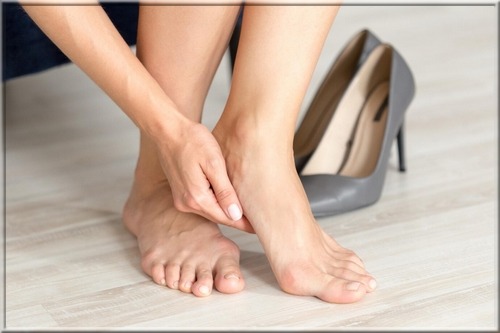
Do you suffer from hallux valgus (bunion) or simply have wide feet?
Finding comfortable shoes while preserving style may seem impossible.
Yet many specialized brands now offer models adapted to wide toe box shoes, with stretch materials and removable soles for better support.
In this guide, we help you:
✓ Choose the best shoes for hallux valgus (brands, criteria, mistakes to avoid)
✓ Understand the difference between wide feet and hallux valgus
✓ Relieve pain through well-adapted orthopedic shoes
What is hallux valgus? Symptoms and causes
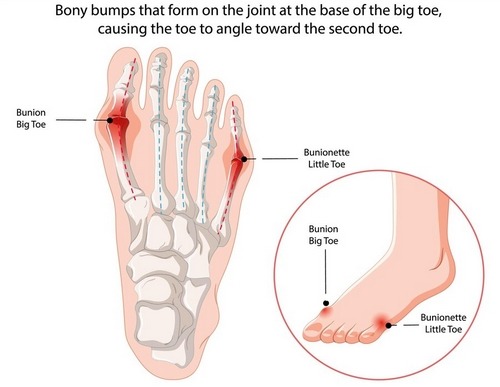
Hallux valgus is a deformation of the big toe that deviates toward the other toes, forming a painful “bunion.”
What are the symptoms of hallux valgus and how to recognize it?
- Pain at the joint
- Redness and swelling
- Difficulty putting on narrow shoes
Main causes of a bunion:
✔ Heredity (family history)
✔ Ill-fitting shoes (high heels, pointed toes)
✔ Flat feet or ligamentous laxity
Good to know: If pain persists, consult a podiatrist to evaluate if surgery is necessary.
How to choose shoes for hallux valgus? (5 essential criteria)
Proper width (G/H) and spacious toe box
For people with wide feet or suffering from hallux valgus, shoe width choice is fundamental.
A standard size can quickly become torture, causing toe compression, painful friction, and worsening deformations.
Why is G/H width indispensable?
– Vital space for toes:
Widths G (wide) and H (extra wide) offer up to 1 cm more than standard sizes, allowing toes to spread naturally without overlapping.
– Complication prevention:
A too-narrow toe box may:
- Worsen existing hallux valgus
- Cause calluses and corns
- Lead to ingrown nails from lateral compression
– Recommended models:
– Podowells women’s shoe with stretch upper and generous width
– New Balance 928v3 walking shoes for men in width H
– Sioux men’s loafers with extra-wide toe box (aff)
Soft and stretch materials
Material choice is as crucial as shoe shape.
Rigid materials can turn each step into agony, while stretch fabrics and elastic leathers provide immediate, lasting comfort.
Why prioritize these materials?
– Perfect adaptation to deformations:
- Stretch leather gradually widens to follow the bunion’s shape
- Stretch knits offer multidirectional elasticity
– Pressure point elimination:
Unlike classic materials that:
- Create friction zones on deformations
- Form rigid folds that hurt skinSoft materials:
- Evenly distribute pressure
- Prevent blisters and redness
– Optimal breathability:
New generations of technical textiles (like in Ecco shoes) combine:
- Elasticity for comfort
- Permeability to prevent maceration
- Durability for long lifespan
Brands to prefer:
– Ecco Helsinki soft leather derbies with orthopedic sole
– Geox Nebula women’s sneakers, ultralight and breathable (aff)
Removable insoles and arch support
The insole system is much more than a comfort detail – it’s a real therapeutic solution.
Removable insoles represent an essential feature that transforms a classic shoe into a real podiatric care tool.
Adjustable closure (Laces or velcro)
Closure system choice isn’t just aesthetic, but a key therapeutic comfort element.
Adjustable closures represent an ingenious solution to perfectly adapt shoe volume to each foot’s specific morphology.
Why this detail makes all the difference?
– Millimeter precision:
- Adjusts shoe to foot’s changing morphology (daily swelling, bunion evolution)
- Offers differentiated adjustment between instep and forefoot
- Compensates frequent asymmetries between both feet
– Optimal support without compression:
- Prevents foot sliding forward (which causes black toenails)
- Eliminates pressure points on deformations
- Allows progressive tightening based on activities
– Adaptability to different pathology stages:
- Laces: ideal for ultra-precise adjustment (moderate to severe hallux valgus)
- Velcro: perfect solution for manipulation difficulties (arthritis, rheumatism)
Examples:
– New Balance 928v3 with laces for personalized adjustment
– Orthofeet Victory: Adjustable velcro system
Wide and stable heel (2-3 cm max)
Heel choice isn’t an aesthetic detail, but a real biomechanical prescription.
A well-designed heel can reduce up to 30% of forefoot pressure, according to a Journal of Foot and Ankle Research study (2023).
Why do these 2-3 cm make all the difference?
– Movement physiology:
- A 2-3 cm heel places the foot in its optimal anatomical position
- Evenly distributes body weight between forefoot and rearfoot
- Maintains Hélix angle (12-15°) for natural walking
– Deformation protection:
- Reduces 40% of load on metatarsophalangeal joint
- Preserves longitudinal foot arch
- Prevents forward sliding causing hyperpressure
– Reinforced stability:
- 50% wider base than classic heels
- Lowered center of gravity for better proprioception
- Reduced lateral sprain risk
– Ideal models:
– Clarks Breeze Sea sandals: Wide stable heel
– Aetrex Jillian sandals : 2cm wedge heel (aff)
Which shoe brands are suitable for wide feet and hallux valgus?
| Model (Brand) | Key Features |
|---|---|
| Podowells women’s | Stretch upper – Built-in orthopedic insole – Width G |
| New Balance 928v3 | Stabilizing heel – Width H – Optimal support |
| Sioux Pujol | Extra-wide toe box – Soft leather – Elegant style |
| Geox Respira | Stretch leather – Ventilation system – Comfortable 3cm heel |
| Ecco Helsinki | Removable orthopedic insole – Soft leather – Excellent shock absorption |
| Geox Nebula | Ultra-lightweight – Breathable – Anti-slip sole |
| Podexpert | Interchangeable insole – Orthotic compatible – Adjustable width |
| Orthofeet Victory | Adjustable velcro – Extra-wide heel – Cushioned insole |
| Clarks Breeze Sea | Stabilized 2.5cm heel – OrthoLite sole – All-day comfort |
| Aetrex Jillian | 2cm wedge heel – Reinforced counter – Arch support |
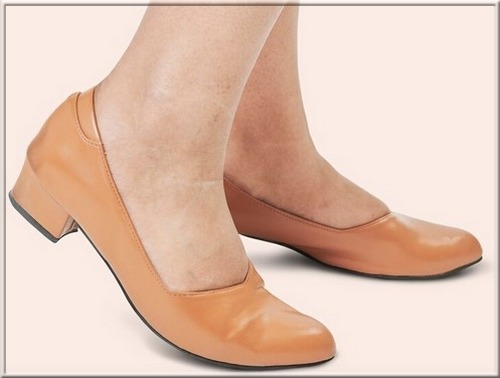
What shoes should you absolutely avoid with bunions?
To protect your feet and avoid worsening deformations, certain shoes must be banned from your wardrobe.
Here’s a detailed analysis of the most harmful models and their concrete effects on foot health:
1. Pointy-toe shoes: Real torture instruments
Harmful mechanism:
- Compresses toes in unnatural position
- Exerts constant lateral pressure on metatarsophalangeal jointConsequences:
- 57% increased deformation progression (Journal of Foot Medicine)
- Painful corns and calluses on toes
- Ingrown nail risk from permanent compression
2. High heels (>4 cm): Your forefoot’s worst enemy
Biomechanical impact:
- Transfers up to 80% of body weight to forefoot
- Increases hallux joint load by 300%
Effects: - Accelerates bunion formation
- Causes metatarsalgia (forefoot pain)
- Higher ankle sprain risk
3. Rigid non-stretch materials: Skin lesion sources
Problems caused:
- Constant friction on sensitive areas
- No adaptation to daily swelling
- Poor sweat evaporationFrequent pathologies:
- Chronic blisters on deformations
- Painful skin thickening (hyperkeratosis)
- Fungal infections favored by moisture
Other lesser-known but equally dangerous traps:
- Shoes without heel counter: Poor heel support → forefoot compensation
- Too-thin soles: No shock absorption → repeated micro-trauma
- Non-adjustable closures: Can’t adapt to daily swelling
- Completely flat soles: Excessive plantar fascia tension
Expert tip:
“A good trick: if you can’t bend the shoe’s front two-thirds with light hand pressure, it’s too rigid for hallux valgus.” – Dr. Lefort, orthopedic surgeon
Risk summary table:
| Type of Shoe | Immediate Effect | Long-Term Consequence |
|---|---|---|
| Pointy toes | Pain after 30 minutes | Worsening by 2° deviation per year |
| 5cm heels | Burning sensation | Metatarsophalangeal arthritis |
| Rigid material | Redness | Skin ulcerations |
How to naturally relieve hallux valgus?
1. Specific therapeutic exercises
a) Active Stretches (3 times per day)
Manual Spreading Technique:
- Sit comfortably with foot flat on the ground
- Gently grasp the big toe between thumb and index finger
- Slowly pull outward for 10 seconds
- Maintain light but perceptible tension
- Repeat 5 times per toe
Advanced Variation:
- Use a therapeutic elastic band around toes
- Perform controlled resistance movements
b) Muscle strengthening (Daily)
Sensory Walking:
- 15 minutes barefoot on fine sand (stimulates plantar receptors)
- Alternate with short grass for varied stimuli
“Grasping” Exercise:
- Place a towel on the floor
- Pick it up using only your toes
- Hold for 5 seconds, release
- 3 sets of 10 repetitions
c) Joint mobilization (2x/day)
Big Toe Rotation:
- Hold the base joint
- Slowly rotate 10 times in each direction
- Gradually increase range of motion
2. Orthotic insoles: Optimal use
Effectiveness Criteria:
- Metatarsal bar to relieve forefoot pressure
- Pronation dome to correct collapse
- EVA (ethylene-vinyl acetate) material for cushioning
Usage Tips:
- Gradual wear: Start with 2 hours/day
- Mandatory adaptation with each shoe change
- Annual podiatrist check-up
Insole Type Comparison Table:
| Type | Advantages | Lifespan | Average Cost |
|---|---|---|---|
| Custom Molded | Perfect adaptation | 2 years | €120-180 |
| Prefabricated | Mild correction | 6 months | €40-80 |
| 3D Printed | Millimeter precision | 3 years | €200-300 |
3. What are the signs you need bunion surgery?
Warning Signs:
- Persistent pain after 6 months of conservative treatment
- M1P1 angle >30° on X-ray
- Inability to wear standard shoes
- Progressive joint stiffness
Modern Techniques:
- Percutaneous: Minimal scar (2mm)
- SCARF: 3D joint correction
- Laser: Enhanced precision (minimal bleeding)
This complete program, combined with proper footwear, can delay or avoid surgery in 70% of cases according to recent studies.
The key? Regular exercises and annual podiatric follow-up.
Finally find comfortable shoes!
Choosing shoes for hallux valgus no longer means sacrificing style.
By selecting specialized brands and respecting technical criteria (G/H width, removable insole, stretch leather), you can relieve pain while remaining elegant.
Hallux Valgus FAQ – Your questions
Can bunions disappear without surgery?
No, the deformity doesn’t resolve spontaneously, but proper shoes and exercises can stop progression in 70% of cases according to podiatric studies.
How to measure foot width for G/H sizing?
Trace your foot on paper, measure width at metatarsals:
– 9-10cm (Size 38) = Width G
– 10cm+ = Width H
How to adapt existing shoes?
Three solutions:
- Use shoe stretchers
- Add removable orthotic insoles
- Apply silicone pads to reduce friction
Young hallux valgus: Effective prevention?
From age 20-30:
– Avoid daily heels >3cm
– Prioritize stretch materials
– Practice toe-grasping exercises
Special bunion socks: Useful or scam?
Proven effective for:
– Reducing friction (flat seams)
– Maintaining toe alignment (toe separators)
– Organic cotton socks are particularly recommended

Marie – FlatFeetSolutions
Flat feet, wide feet or plantar fasciitis? Like you, I'm tired of useless advice.
On this site, I share practical solutions, shoe tests and tips based on my experience and extensive research. My goal: to help you make informed choices for more comfort in daily life.
📌 Important: My advice is informative. For any foot health problem, always consult a podiatrist.
