
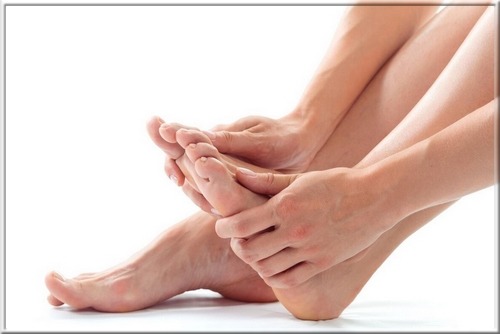
If your shoes feel uncomfortably tight, you might wonder: Do I have naturally wide feet, or are my feet swollen?
While both conditions can cause discomfort, they stem from different causes and require distinct solutions.
Swelling (edema) is often temporary and linked to health factors, while wide feet are a structural trait.
Misdiagnosing the issue can lead to poor footwear choices and prolonged discomfort.
This comprehensive guide will help you:
✔ Visually distinguish between wide feet and swelling
✔ Identify when swelling is a medical concern
✔ Choose the best footwear for each condition
✔ Explore orthotic solutions and lifestyle adjustments
Wide feet vs. swollen feet: 5 visual signs to tell the difference
1. Puffiness vs. natural width
- Swollen feet appear puffy, with stretched or shiny skin.
You may notice temporary indentations when pressing on the area. - Wide feet maintain a consistent shape—broad but firm, without excessive softness or fluid retention.
2. The finger test
Press your thumb firmly into the top of your foot for a few seconds.
- If an indentation remains, it’s likely swelling (edema).
- If the skin bounces back immediately, your foot is naturally wide.
3. Timing matters
- Swelling often worsens as the day progresses due to gravity and activity.
- Wide feet stay the same size regardless of the time of day.
4. Symmetry (one foot vs. both)
- Swelling usually affects both feet (unless due to injury or a localized issue like a blood clot).
- Wide feet may be asymmetrical—one foot slightly wider than the other.
5. Skin appearance
- Swollen feet may look shiny, tight, or red.
- Wide feet have normal skin texture, just with a broader shape.
*Pro Tip: Take measurements at different times of the day. If your foot size fluctuates, swelling is likely the cause.
When is foot swelling a medical emergency?
While mild swelling can result from prolonged standing, heat, or salty foods, sudden or severe swelling may signal a serious condition.
Seek immediate medical attention if you experience:
✔ Sudden, unexplained swelling (especially in one leg—could indicate a blood clot)
✔ Pain, redness, or warmth in the swollen area (possible infection)
✔ Shortness of breath or chest pain (may indicate heart or kidney problems)
✔ Swelling that doesn’t improve overnight (could point to lymphedema or circulation issues)
When in doubt, consult a doctor – early intervention can prevent complications.
Best shoes for wide and swollen feet: What to look for
Finding comfortable footwear for swollen feet requires careful consideration of several key design elements.
The right shoes should accommodate fluctuations in foot volume while providing proper support and preventing additional swelling. Let’s examine the essential features that make a shoe ideal for edema and wide feet.
Key features: What makes a shoe good for swollen feet?
– Adjustable closure systems
The most crucial feature for swollen feet is adjustability.
Unlike standard shoes with fixed dimensions, adjustable closures allow for:
- Gradual tightening or loosening throughout the day
- Customized fit for fluctuating swelling levels
- Even pressure distribution to prevent constriction
Look for hook-and-loop straps, elastic laces, or multiple buckle positions that can adapt to your foot’s changing needs.
– Flexible upper materials
The shoe’s upper portion should feature:
- Stretchable fabrics that expand with swelling
- Breathable materials to prevent overheating
- Seamless construction to avoid irritation
Premium options use advanced knit technologies or four-way stretch mesh that accommodates width and volume changes without losing structural integrity.
– Generous footbed design
An optimal footbed for swelling includes:
- Removable insoles to accommodate orthotics
- Extra depth (minimum 1/2″ additional vertical space)
- Contoured arch support that doesn’t compress the foot
- Cushioned heel cup for shock absorption
– Stable yet flexible sole unit
The outsole should balance:
- Rocker designs to reduce joint strain
- Adequate cushioning for impact protection
- Lightweight construction to prevent fatigue
- Firm heel counter for stability without restriction
– Therapeutic interior features
Look for interior elements that:
- Wick moisture to prevent maceration
- Feature antimicrobial treatments
- Include padded collars and tongues
- Have smooth, irritation-free linings
5 best shoes for wide and swollen feet (Podiatrist-reviewed)
After evaluating dozens of options, these models stand out for their exceptional combination of the above features:
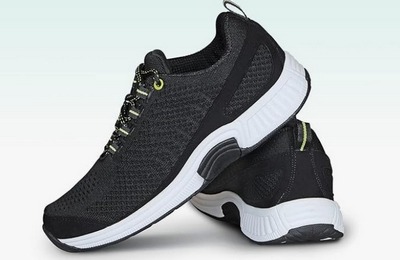
1. Orthofeet Coral Stretch Knit: Best for severe edema (aff)
✅ 3 Key Benefits
- Pressure-free adaptive fit
- Stretchable uppers accommodate swelling fluctuations throughout the day
- Widest point across the forefoot eliminates pressure on sensitive or swollen areas
- Bunion & hammertoe relief
- Engineered for swollen feet, bunions, and hammertoes
- Available up to X-Wide/2E to prevent compression on deformities
- Ortho-cushion
- Removable orthotic insole allow customization for swelling severity
- Multi-layer cushioning and air pockets reduce heel pressure and absorb shock
- Pressure-free adaptive fit
⚠️ 3 limitations to consider
- No adjustable straps
- Limited width options for extreme swelling
- Mild side support
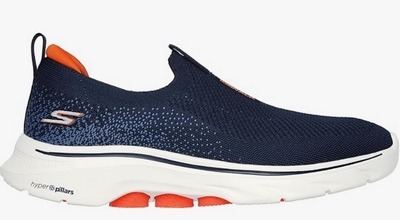
2. Skechers Go Walk 7: Best lightweight shoe for mild swelling (aff)
✅ 3 Key Benefits
- Ultra-lightweight comfort
- Weighs only 6oz per shoe (ideal for fatigue)
- Flexible sole promotes natural movement
- Breathable air-cooled mesh
- Prevents overheating in swollen feet
- Light stretch accommodates mild width changes
- Slip-on convenience
- No-tie design for arthritic hands
- Goga Mat insole provides light arch support
⚠️ 3 Limitations
- No adjustability (fixed fit)
- Minimal arch support
- Not for severe swelling
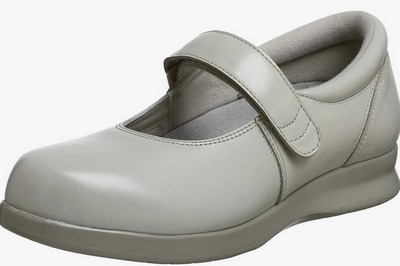
3. Drew Shoe Bloom Extra Wide: Best extra-depth shoes with straps (aff)
✅ 3 Key Benefits
- Double-depth construction
- 5/8″ extra vertical space for orthotics/swelling
- Removable foam insole
- Dual adjustable straps
- Secure midfoot and forefoot independently
- Wide opening for easy access
- Diabetic-friendly design
- Seamless interior lining
- Rigid heel counter for stability
⚠️ 3 Limitations
- Heavy (14oz per shoe)
- Limited color options
- Runs narrow in toe box
4. Hoka Bondi 8: Best cushioned shoes for all-day standing (aff)
✅ 3 key benefits
- Maximum cushioning
- 33mm marshmallow-soft EVA foam
- Meta-Rocker reduces joint strain
- Engineered mesh upper
- Strategic stretch zones accommodate swelling
- Breathable yet supportive
- Extended width options
- Available up to 4E for severe edema
- Removable insole
⚠️ 3 Limitations
- Bulky appearance
- Requires break-in period
- Fixed laces (no adjustability)
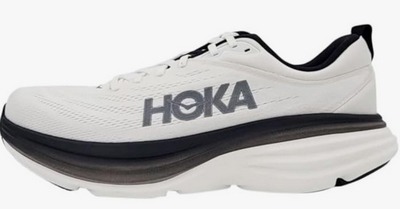
5. New Balance Fresh Foam X 1080v13: Best balanced support for swollen feet (aff)
✅ 3 Key Benefits
- Responsive Fresh Foam midsole
- Balanced cushioning for all-day wear
- 8mm drop promotes natural gait
- Hypoknit upper
- Adaptive stretch where needed
- Reinforced support in high-stress areas
- Orthotic-ready design
- Removable insole for custom inserts
- Available in 2E-4E widths
⚠️ 3 Limitations
- Expensive (but choose your retailer carefully)
- Limited color options in wide widths
- Less adjustable than strap shoes
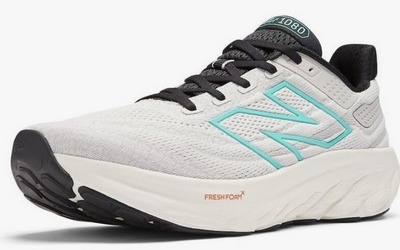
Swollen feet shoes: Comparison cheat sheet
| Model | Best For | Max Swelling | Weight | Adjustability |
|---|---|---|---|---|
| Orthofeet Coral | Severe edema | ★★★★★ | 11oz | Laces only |
| Skechers Go Walk 7 | Mild swelling | ★★☆☆☆ | 6oz | None |
| Drew Shoe Bloom | Moderate-severe | ★★★★☆ | 14oz | 2 straps |
| Hoka Bondi 8 | All-day standing | ★★★★☆ | 10.7oz | Laces only |
| NB 1080v13 | Balanced support | ★★★☆☆ | 9.8oz | Laces only |
* Pro Tip: For severe swelling, prioritize adjustable straps + removable insoles (like Drew). For mild cases, stretch uppers (Orthofeet/Skechers/NB) may suffice.
How to choose the right shoes for swollen feet: 5 tips
When trying these or similar shoes:
- Schedule fittings for late afternoon when swelling peaks
- Wear the same socks you’ll use daily (especially if using compression socks)
- Walk for several minutes in the store to assess comfort
- Check for at least 1/2″ space beyond your longest toe when standing
- Ensure no pressure points exist along the foot’s perimeter
Remember that proper footwear is just one component of edema management.
Combine these shoe choices with elevation, compression therapy, and any prescribed medical treatments for comprehensive swelling relief.
Consult a podiatrist if swelling persists despite proper footwear, as this may indicate an underlying condition requiring medical attention.
Extra-depth vs. wide-width: Which is better for swelling?
The answer depends on your swelling severity and foot shape.
Here’s how they compare:
Extra-depth shoes vs. wide-width: Key differences
| Feature | Extra-Depth Shoes | Standard Wide-Width Shoes |
|---|---|---|
| Vertical Space | 3/8″–1″ additional height | Minimal extra depth |
| Best For | Severe edema, bulky dressings, AFO braces | Mild-moderate swelling, natural wide feet |
| Adjustability | Often includes hook-and-loop straps | Typically fixed-width design |
When extra-depth wins
✔ Post-surgical recovery (accommodates bandages)
✔ Lymphedema/chronic edema (prevents top-of-foot pressure)
✔ Diabetic swelling (reduces friction risk)
When wide-width suffices
✔ Mild daily swelling (heat or activity-related)
✔ Naturally wide feet (no fluid retention)
✔ Budget-friendly options (more style choices)
*Pro Tip: Measure your instep height while swollen – if over 3″, opt for extra-depth.
Top 3 extra-depth shoes for severe swelling
– Dr Comfort Performance X
– Apis Mt. Emey 9501
– Skechers GoWalk ArchFit (aff)
Can orthotics help with swollen feet and wide feet?
Custom orthotics can benefit both conditions, but differently:
✔ For wide feet – Support the arch and prevent overpronation (which can worsen foot strain).
✔ For swelling – Improve circulation and reduce pressure points.
Top pick: Soul Insole’s customizable options – Heat-moldable for a personalized fit.
*Podiatrist tip: If swelling is due to poor circulation, compression socks + orthotics may help.
Why do my feet swell at night but not in the morning?
Foot swelling that worsens by evening but resolves overnight is typically caused by gravity-dependent fluid accumulation combined with daytime activities.
Here’s what’s happening in your body:
Primary causes
Gravity’s pull
- During the day, standing/sitting allows fluid to pool in feet/ankles (dependent edema)
- At night, lying flat lets fluids redistribute through the bloodstream
Venous insufficiency
- Weak leg veins struggle to return blood upward
- Creates “backpressure” that forces fluid into tissues
Lymphatic slowdown
- Sedentary days reduce lymph vessel pumping action
- Movement during sleep reactivates drainage
Contributing factors
| Daytime Triggers | Nighttime Relief |
|---|---|
| Prolonged standing/sitting | Leg elevation during sleep |
| High-sodium diet | Reduced sodium intake overnight |
| Tight footwear | Barefoot relaxation |
| Heat/humidity | Cooler nighttime temps |
When to worry
⚠️ Seek medical advice if you notice:
- Swelling that doesn’t improve overnight
- Red/discolored skin
- Pain or warmth in calves
3 Proven relief strategies
- Afternoon elevation
- Lie with feet above heart level for 20 mins (uses gravity to drain fluid)
- Compression socks (15-20mmHg)
- Apply in morning before swelling starts
- Remove at bedtime
- Hydration + movement
- Drink water to flush excess sodium
- Take 2-min walking breaks hourly
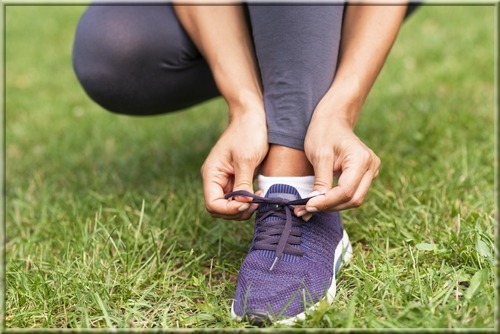
Barefoot shoes for swollen feet: Relief or risk?
Swollen feet require careful footwear choices – so are barefoot shoes a smart option or a potential hazard?
Here’s what you need to know:
❌ Why barefoot shoes are risky for swelling
- No adjustability
- Most lack straps/laces, so they can’t adapt to swelling fluctuations throughout the day.
- Risk of cutting off circulation if feet outgrow the shoe’s stretch capacity.
- Zero cushioning
- Thin soles offer no shock absorption, increasing pressure on inflamed tissues.
- May worsen pain from plantar fasciitis or arthritis.
- Compression conflicts
- Cannot accommodate compression socks (a key swelling management tool).
- Tight fit when swollen may impair lymphatic drainage.
✅ When they might work (with caution)
- Mild, temporary swelling
- Example: Heat-related puffiness in otherwise healthy feet.
- Best picks: Stretchable models like Vivobarefoot Geo Knit or Lems Chillum.
- Pre-swelling prevention
- Worn early in the day before significant swelling occurs.
- Must switch to supportive shoes later.
- Controlled lymphedema
- Only if paired with toe-spacer socks and limited wear time (1–2 hours).
⚠️ Critical red flags
Avoid barefoot shoes if you have:
- Diabetes (risk of undetected pressure sores)
- Severe edema (shoes may act as a tourniquet)
- Balance issues (lack of stability increases fall risk)
Safer alternatives to barefoot shoes for swollen feet
| Adjustability | Orthofeet Coral Stretch (3 straps) |
| Mild swelling + width | Altra Escalante (hybrid barefoot) |
| Max cushioning | Hoka Bondi 8 Wide |
If you still want to try barefoot shoes
- Size up – Buy 1–2 sizes larger than normal for swelling room.
- Prioritize stretch – Only consider knit/upper models.
- Limit wear time – Use just 1–2 hours/day, monitoring for redness or tightness.
- Elevate after use – 15 minutes of leg elevation post-wear to reduce fluid buildup.
Finding the right footwear for swollen feet
Choosing the best shoes for swollen feet requires balancing medical needs, comfort, and functionality.
Whether your swelling is mild or severe, temporary or chronic, the right footwear can significantly improve your mobility and quality of life.
Key takeaways:
✔ For moderate to severe swelling: Prioritize adjustable straps, extra depth, and stretchable uppers.
✔ For mild swelling or wide feet: Consider hybrid barefoot-style shoes with caution.
✔ Avoid risks: Steer clear of rigid, narrow, or non-adjustable shoes that restrict circulation.
Next steps:
- Assess your swelling pattern (morning vs. evening, one foot or both).
- Try before you buy – Look for free-return policies when ordering online.
- Consult a specialist if swelling is persistent or painful.
Remember: The perfect shoe should adapt to your feet – not the other way around.
With the right pair, you can stay active, comfortable, and confident every step of the way.
FAQ: Swollen feet, sizing, and footwear solutions
Can I wear my regular shoes if I only have mild swelling?
For mild, occasional swelling, you might get by with your regular shoes—but it’s risky. Opt for stretchable uppers (like knit sneakers) or half-size-up pairs to avoid pressure. For daily wear, invest in adjustable wide-width shoes to prevent long-term damage.
Can foot swelling be reduced by changing shoes alone?
Shoes help manage swelling but rarely eliminate it. Pair proper footwear with:
– Daily elevation (feet above heart level)
– Low-sodium diet
– Compression therapy (if recommended by your doctor)
Are custom orthotics worth it for swelling?
If swelling is chronic or linked to a condition (diabetes, arthritis), yes.
Custom orthotics redistribute pressure away from swollen areas, improve circulation with arch support and fit into extra-depth shoes for versatility.
Can I wear high-tops or boots with swollen feet?
Only if they’re extra-wide/extra-depth (like Drew Shoe’s boot styles), adjustable (zippers + laces/straps) and soft-lined (no rigid ankle pressure).
Why do some shoes make my swelling worse?
Common culprits: Tight toe boxes (restrict lymphatic drainage), flat, unsupportive soles (impair blood flow) and non-breathable materials (trap heat, increasing fluid retention).

Marie – FlatFeetSolutions
Flat feet, wide feet or plantar fasciitis? Like you, I'm tired of useless advice.
On this site, I share practical solutions, shoe tests and tips based on my experience and extensive research. My goal: to help you make informed choices for more comfort in daily life.
📌 Important: My advice is informative. For any foot health problem, always consult a podiatrist.
